
In this video, the U.S. based non-profit Transcend, which professes to help school communities become more equitable, talks about how although the world would be unrecognizable in many ways since the late nineteenth century, one establishment that has not changed much at all is the school. Even if a nineteenth century student were to be suddenly teleported and enters a school of today anywhere in the world, there will not be much of a difference. And to a large extent, this is true.
On the one hand, it seems like educational technology has been the buzzword since the late 90s, and yet on another, it feels like we still grapple with the same fundamental problems of education. So where lies the gap?
Changes, More Changes
Although the fundamental system of schooling has not changed much, numerous changes have been brewing in the periphery of education.
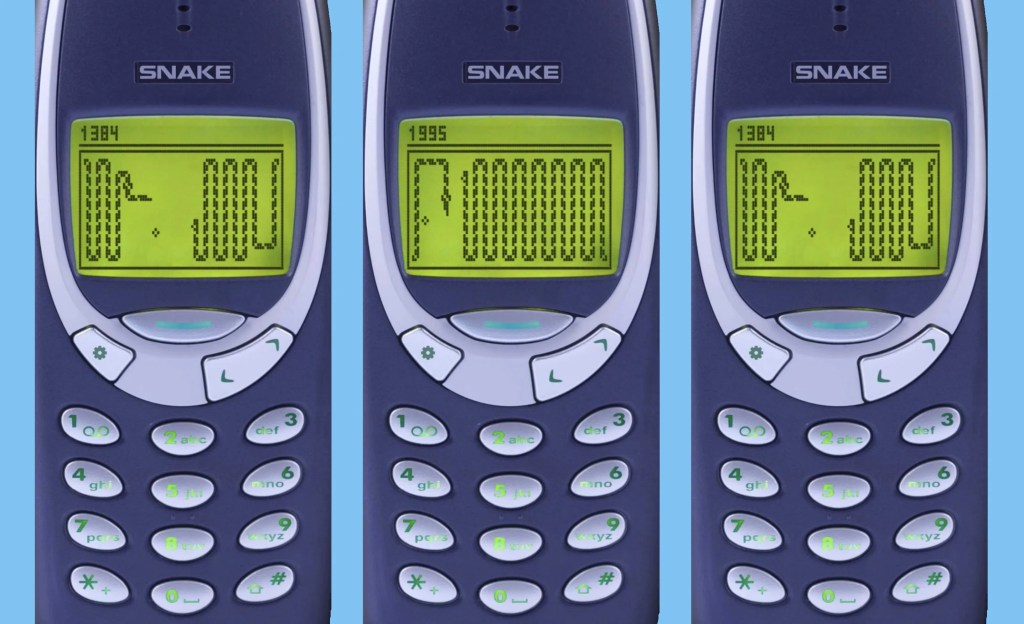


- The first mobile app was introduced in 1997; it was a game called Snake on the Nokia 6110 phone.
- In 2007, the app market took off enthusiastically with the introduction of the iPhone; then, iPads came into the marketplace in 2011.
- By 2015, there were over 80,000 “educational apps,” although the majority of them had no sound research-based design.
Today, the digital lives of children are rich with networked information (Livingstone et al., 2021). Teenagers access news on their phones, chat with their peers on social media, share news on social media, share pictures, receive and submit assignments through email, and so on. But have these all translated into better learning gains? The evidence is mixed (Selwyn, 2015).
Neil Selwyn (2015) argues that we need to be weary about always equating technology as the next big game changer for education, and we need to have a constructive distrust towards technology. One thing we need to ask ourselves is that if the future should always synonymous with ‘more’ – more tech, more sophistication, more gadgets and so on. A discussion around technology cannot be purely pedagogical and needs to incorporate other perspectives such as society, politics, economics, environment, and so on.
The Darker Side of Tech
A discussion about digital futures is incomplete without acknowledging that it brings with it myriad challenges and concerns, especially those centered around accuracy, access, and power dynamics.
Access – Who will have access to resources and who will not? With the same resources, who will be better able to thrive and who will not? And how can we bridge the gap in this divide? Many marginalized communities might not be able to access the broadband bandwidth needed to participate in technology (Schradie, 2020).
Accuracy – Similarly, as I will discuss in other posts as well, more advanced technologies also allow more nuanced misinformation to spread, making it more difficult to tell the real from the fake (de Beer & Matthee, 2020).
Power Dynamics – We need to be aware of the documented shortcomings of today’s technologies, especially around people of color— and this kind of biased algorithmic data fed into our machines perpetuate cases such as facial recognition software misidentifying people of color and the racial and gender biases in algorithms to more cases of online hate speech targeting vulnerable groups of people (Selwyn, 2015).
Well aware of these concerns, I also do believe that the world is not going to get disconnected and go completely offline, unless some unimaginable, dramatic event happens in the future. On the contrary, more and more people around the world are going to be connected, carrying the Web in smaller, more portable devices around with them all the time. It wouldn’t be possible to completely shun the digital from education. Rather, we need to look for ways to sensibly marry the two for the best outcome for children and society.
References
Common Sense Media. (Nov 4, 2015). The Common Sense Census: A Day in Tweens’ Digital Lives [Video]. YouTube. https://www.youtube.com/watch?v=2PUlSS_fJ88&t=19s
de Beer, D., & Matthee, M. (2020). Approaches to identify fake news: A systematic literature review. In Tatiana Antipova (Ed.), Integrated Science in Digital Age, Springer International Publishing, Cham, (pp. 13–22)
Livingstone, S., Mascheroni, G., & Stoilova, M. (2021). The outcomes of gaining digital skills for young people’s lives and wellbeing: A systematic evidence review. New Media & Society, 1–27.
Schradie, J. (2020). The great equalizer reproduces inequality:
How the digital divide is a class power divide. In B. Eidlin
& M. A. McCarthy (Eds.), Rethinking class and social difference. Emerald. (pp. 81–101). https://doi.org/10.1108/S0198-
871920200000037005
Selwyn, N. (2015). Technology and education – Why it’s crucial to be critical. In S. Bulfin, N.F. Johnson and C. Bigum (Eds.), Critical Perspectives on Technology and Education. New York: Palgrave Macmillan, (pp. 245–55)
Transcend. (Dec 13, 2021). Transcend [Video]. Vimeo. https://vimeo.com/656331524
 Sinduja Ragunathan
Leave a comment