
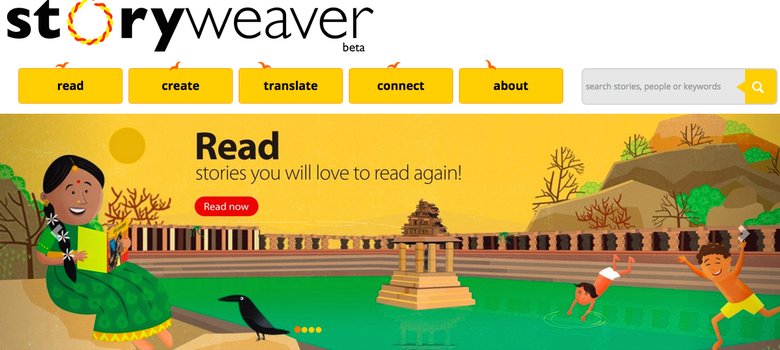
StoryWeaver is a multilingual digital platform that hosts thousands of children’s storybooks in various languages free of cost under a Creative Commons CC-BY license. The website was started in 2015 by non-profit foundation Pratham Books. Today, it hosts about 8,700 books in about 114 languages, including 71 international and 25 endangered languages (Moorthy, 2018). All these books are free to download, share, translate, and print.
StoryWeaver is not just a digital repository of books. It is an open, interactive, collaborative resource that offers several possibilities for publishing, translation, and distribution of children’s books. Anyone can adapt, translate, create, and publish stories here.
A critical discussion about this platform will need to entail conversations around its purpose, content, and site experience.
Purpose

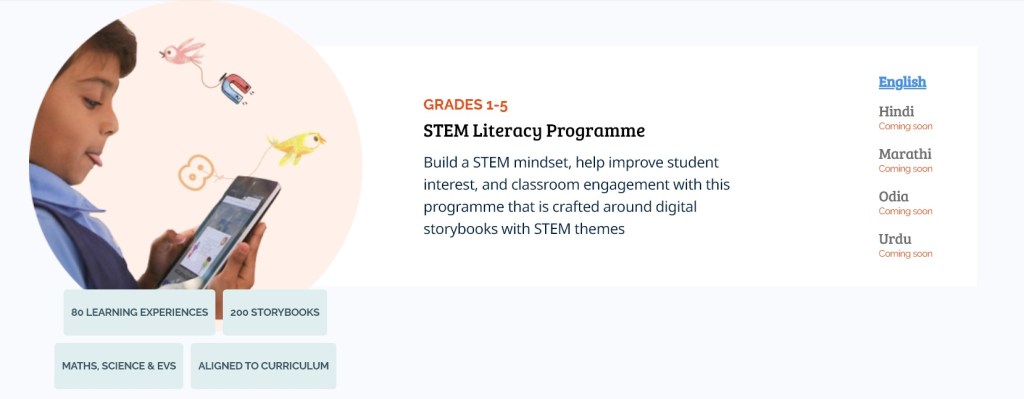
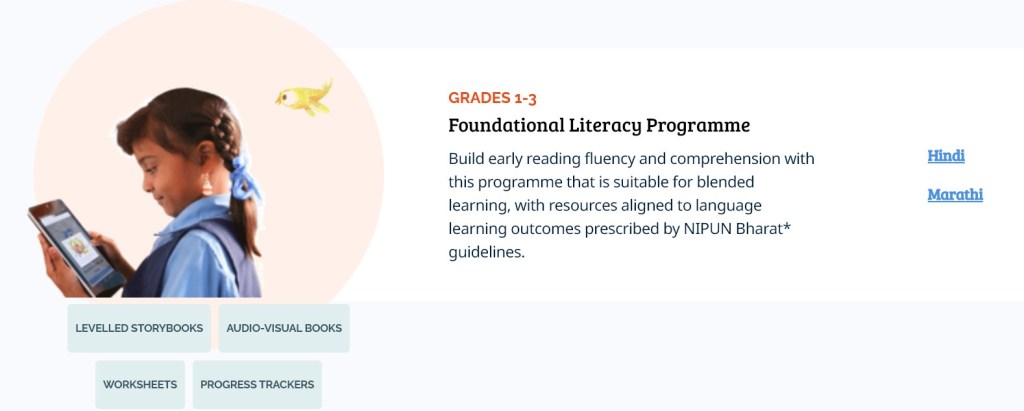
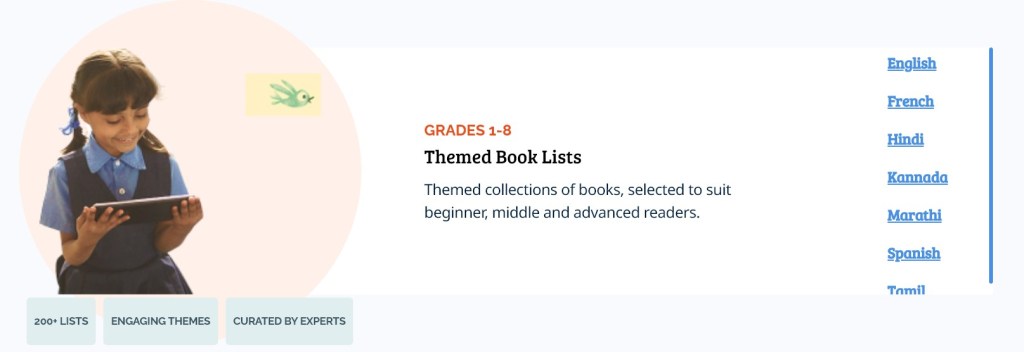
- StoryWeaver primarily purports to make reading more accessible. Its wide variety of books, classified by reading level and theme, can be readily engaged with in classrooms and homes. Educators are also provided list-based recommendations of resources that they can particularly use for STEM literacy or foundational early literacy.
- By promoting books in several regional languages, it provides resources for use in several classrooms where the medium of instruction is not English. There’s currently a huge dearth of accessible educational resources in regional languages (Jhingran, 2009).
- The ‘bilingual’ books, where content is presented in both English and a regional language, will go a long way in ESL classrooms to teach English (L2) to young children through L1 (Cook, 2001).
- The extent of the mission’s success though will depend to a huge extent on reduction in the digital divide and greater ease and access of teachers in low-income and regional-language schools with using such resources.
Content
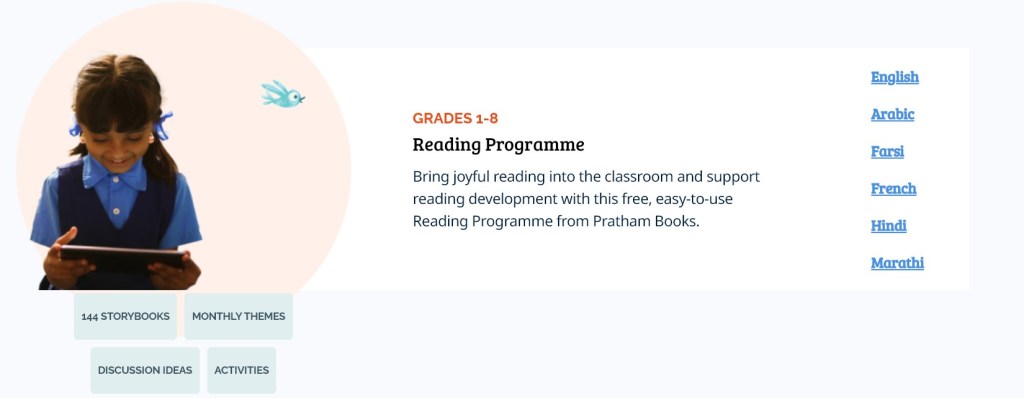
- Reading levels of the books are categorized from L1 to L4. Although the broad categorization seems fairly accurate, there is quite a range of variation within each level, and educators and parents might need to do a fair bit of browsing to choose what their cohort might ideally find useful.
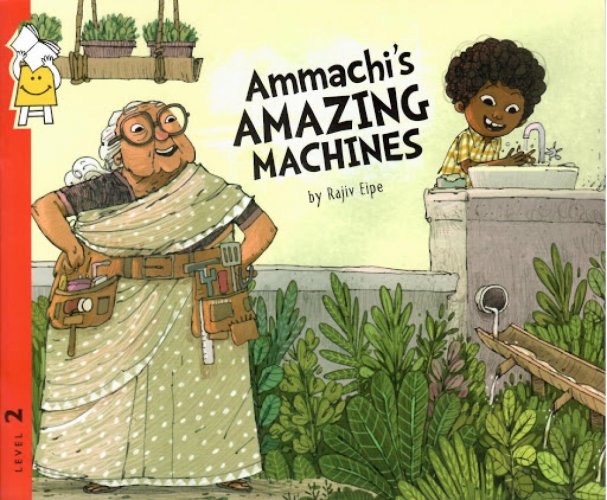
- There is a wide range of illustration types, and I observe them to be of high standards and apt for children’s books.
- The content, on the other hand, sometimes falls flat. There are many books whose plot and style are at par with popular picture books available commercially, but there are also many that might not be engaging enough to interest children.
- The ‘Read Aloud’ audio feature is extremely child friendly and engaging.
Site Experience
- The platform seems extremely user friendly for writers, translators, and publishers. I believe anyone with an average level of digital proficiency can still navigate and find what they are looking for. I tried my hand at translating a book from Tamil to English. Not only did I thoroughly enjoy the process, but the whole experience felt quite seamless and democratic.
- I also believe that the ease of creation makes the website a lovely resource to train children in digital literacy, especially with respect to creating their own digital works.
To summarize, I think StoryWeaver is a wonderful literacy initiative that is easy to navigate, share with, and create on. As Kucirkova (2019) suggests, distributed authorship and free pricing make digital books a potent literacy tool that offers choice, diversity, and volume of access, especially for those who speak minority languages or from houses with little history of reading.
References:
Cook, V. (2001). Using the First Language in the Classroom. The Canadian Modern Language Review, 57(3), 402–423.
Jhingran, D. (2009). Hundreds of home languages in the country and many in most classrooms: Coping with diversity in primary classrooms in India. In A. K. Mohanty, M. Panda, R. Phillipson and T. Skutnabb-Kangas (Eds.). Multilingual education for social justice: Globalizing the local (pp. 250-267). New Delhi: Orient Blackswan
Kucirkova, N. (2019). Children’s Reading With Digital Books: Past Moving Quickly to the Future. 13(4), 208–214.
Moorthy, S. (2018) ‘StoryWeaver brings to life dying languages through technology and children’s stories’, The Hindu Business Line, July 24. Available at: https://www.thehindubusinessline.com/news/storyweaver-brings-to-life-dying-languages-through-technology-and-childrens-stories/article24505598.ece (Accessed: 17 Feb 2023).
 Sinduja Ragunathan
Leave a comment